Oct 9, 2026Buying Guides
Navigating Raw Material Volatility: How Hardware Buyers Can Hedge Zinc & Aluminum Price Fluctuations
Discover strategic hedging mechanisms, raw material pricing models, and supply chain strategies to protect hardware procurement budgets against LME zinc and aluminum price volatility.
Navigating Raw Material Volatility: How Hardware Buyers Can Hedge Zinc & Aluminum Price Fluctuations
Introduction: The Hidden Risk in Hardware Sourcing
In the global hardware manufacturing industry, material cost isn't just a component of pricing—it is often the single volatile variable capable of eroding profit margins overnight. For procurement leaders, supply chain executives, and brand owners sourcing zinc alloy and aluminum cabinet hardware, raw material price fluctuations represent a persistent operational threat.
With global commodities trading on exchanges like the London Metal Exchange (LME) and Shanghai Futures Exchange (SHFE), base metals such as Zinc (ZNC) and Aluminum (ALI) experience sharp price swings driven by macroeconomic factors, energy tariffs, geopolitical tensions, and supply chain disruptions.
When metal prices surge, manufacturers are forced to pass costs downstream. When prices drop, buyers who locked in fixed long-term rates risk overpaying compared to current spot markets.
How can overseas buyers navigate raw material volatility effectively without sacrificing quality or budget predictability? Here is a strategic guide on how professional hardware buyers hedge against raw material price swings when working with Chinese manufacturing partners.
1. Understanding the Cost Structure: Metal Weight vs. Value-Add
To hedge effectively, buyers must first understand how raw metal costs impact the final Unit Price of cabinet handles, knobs, and profiles.
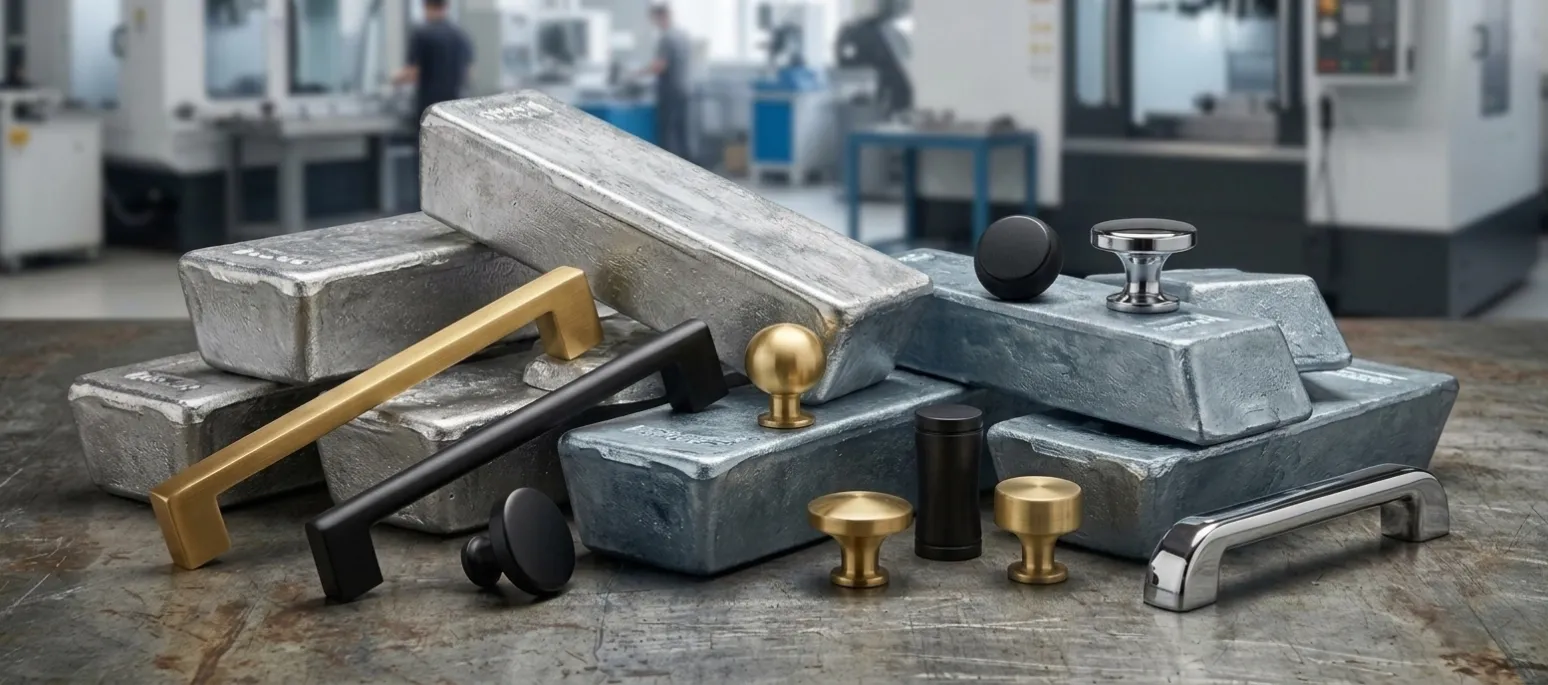
In high-density products like Zinc Alloy Die-Cast Handles, raw zinc ingot costs typically account for 35% to 50% of the total Ex-Works (EXW) product price. The remaining cost is distributed across mold amortization, precision machining, electroplating/coating surface treatment, quality inspection, and packaging.
For Extruded Aluminum Profiles and Handles, aluminum ingot prices combined with processing premiums (billet conversion fees) make up 40% to 60% of the overall cost.
Total Product Cost = (Raw Metal Weight × Spot Price) + Processing/Machining + Surface Finishing + Overhead & Profit
Because metal cost represents such a significant percentage of the finished unit, even a 15% surge in LME zinc spot prices can directly increase finished goods manufacturing costs by 5% to 8%.
2. Dynamic Pricing Models: Moving Away from Rigid Fixed Quotes
Historically, hardware suppliers offered 90-day or 180-day fixed price quotes. However, in times of high market volatility, rigid quotes create friction:
- If prices spike, suppliers face unsustainable margin compression or delay fulfillment.
- If prices drop, buyers feel locked into uncompetitive pricing.
Leading B2B buyers now adopt Index-Linked Pricing Models (also known as Metal Index Floating Clauses).
How Index-Linked Pricing Works:
- Establish a Baseline: The supplier and buyer agree on a baseline metal market price (e.g., LME Zinc spot rate at $2,800/ton) at the time of contract execution.
- Define a Floating Tolerance Window: A buffer zone—typically ±3% to ±5%—is agreed upon. As long as market fluctuations remain within this window, product prices remain unchanged.
- Trigger Adjustment Mechanisms: If the metal index moves beyond the buffer window prior to production material lock-in, the finished unit price automatically adjusts based on a pre-agreed formula tied to the net metal weight of the product.
This transparent framework eliminates friction, ensuring fairness and long-term supply continuity for both parties.
3. Financial & Physical Hedging Strategies for Procurement Teams
Professional sourcing teams utilize three primary physical and contractual strategies to hedge hardware purchasing costs:
A. Material Pre-Purchase & Ingot Reservation (Physical Lock-In)
When metal prices drop to favorable historical levels, buyers can instruct their manufacturing partner to pre-purchase raw zinc or aluminum ingots specifically allocated for their upcoming production runs.
- Pros: Guarantees exact pricing for scheduled orders over 6 to 12 months.
- Cons: Requires upfront deposit capital or commitment to binding production schedules.
B. Tiered Order Batching & Blanket Purchase Orders (BPOs)
Instead of placing isolated purchase orders (POs) throughout the year, buyers issue a Blanket Purchase Order covering estimated annual volume while releasing delivery batches quarterly.
- This allows the manufacturer to secure volume discounts on raw metal stocks while giving the buyer flexibility to adjust order releases based on real-time inventory demand.
C. Standardizing Alloy Specifications
Unnecessary custom metal formulations increase supply chain risk. By adhering to international standard alloys—such as Zamak 3 / Zamak 5 for zinc die-casting and 6063-T5 for aluminum extrusions—buyers ensure their supplier can source raw materials instantly from deep, highly liquid spot markets without paying custom alloy premiums.
4. How Strategic Suppliers Help Buyers Buffer Price Shocks
A reliable manufacturing partner does not simply pass cost increases down the line; they act as a buffer through operational resilience and engineering value.
At YOUQI Hardware, we help global partners mitigate commodity volatility through structured supply management:
- Raw Material Reserve Buffers: We maintain strategic raw ingot reserves during price dips, protecting long-term partner contracts from short-term market spikes.
- Design for Manufacturing (DFM) Optimization: Our engineering team helps clients optimize product weight through structural wall-thickness analysis and ribbed core designs—reducing unnecessary metal weight without compromising structural strength or tactile feel.
- Transparent Cost Breakdowns (Open-Book Quotations): We provide transparent bill-of-materials (BOM) breakdowns separating raw material weight costs from manufacturing and finishing costs, giving buyers complete clarity during market negotiations.
Conclusion: Turning Volatility into a Competitive Advantage
Raw material price fluctuations are an inevitable reality of the global metal hardware industry. However, volatility does not have to mean unpredictability.
By transitioning from outdated fixed-price models to transparent index-linked contracts, strategic material pre-booking, and structural weight optimization, forward-thinking procurement teams can protect their profit margins, maintain stable retail pricing, and secure an uninterrupted supply chain regardless of market conditions.
Looking to optimize your cabinet hardware supply chain or structure transparent B2B procurement terms? Contact the YOUQI Hardware engineering and sales team today to discuss customized sourcing solutions. info@yqhardware.com