Sep 15, 2026Buying Guides
How to Fix Cabinet Hinges: Sagging, Noise & Alignment | YOUQI
Is your cabinet door sagging, squeaking, or misaligned? Follow this complete troubleshooting guide to adjust 3-way concealed hinges, stop noise, and fix loose screws.
Troubleshooting Cabinet Hinges: Fixing Sagging, Noise, and Misalignment Issues
Cabinet hinges are the unsung workhorses of residential kitchens, wardrobes, bathroom vanities, and commercial millwork. Opening and closing thousands of times a year, even the highest-quality hardware can eventually experience misalignment, sagging, friction noise, or loose mounting screws.
For homeowners, property managers, and furniture technicians, addressing these issues early prevents costly damage to cabinet frames and door fronts. This step-by-step troubleshooting guide covers how to diagnose, adjust, and repair common cabinet hinge problems—and when it’s time to upgrade to heavy-duty, long-lasting hardware.
1. Fixing Misaligned or Sagging Cabinet Doors (3-Way Concealed Hinge Adjustment)
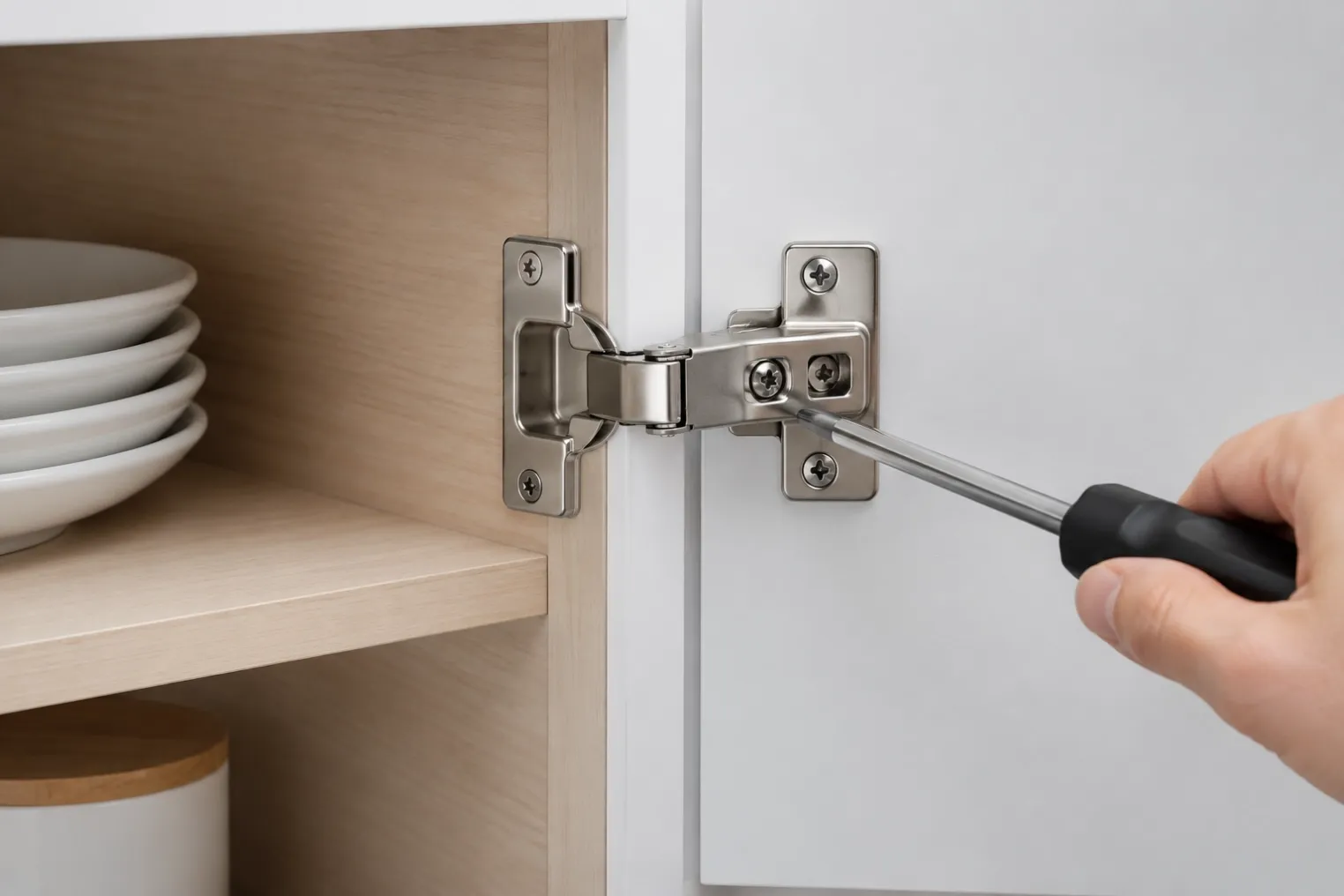
European-style concealed hinges (Euro hinges) are the standard in modern cabinetry. They feature built-in 3-way adjustment screws that allow you to realign sagging or uneven doors without removing the hinge or re-drilling holes.
Step-by-Step Adjustment Guide
Before making adjustments, inspect all hinge screws on the cabinet frame and door to ensure none are loose. Then, use a standard Phillips screwdriver to make small, quarter-turn adjustments:
- Vertical Adjustment (Up / Down):
- Symptom: The door sags, rubs against the bottom frame, or sits lower than adjacent doors.
- Solution: Locate the vertical mounting plate screws (usually top and bottom of the mounting plate attached to the cabinet body). Slightly loosen the screws, slide the door up or down to align with adjacent doors, and retighten.
- Horizontal Adjustment (Side-to-Side):
- Symptom: Unbalanced gaps between double doors, or the door rubs against the side frame when closing.
- Solution: Turn the front adjustment screw located on the hinge arm. Turning clockwise moves the door closer to the cabinet edge; turning counterclockwise moves it away.
- Depth Adjustment (In / Out):
- Symptom: The door doesn’t flush-close against the cabinet face, or the gap at the top/bottom is uneven when viewed from the side.
- Solution: Turn the rear adjustment screw on the hinge arm to move the door closer to or further away from the cabinet box.
2. Eliminating Noisy, Squeaking, or Stiff Hinges
Over time, airborne grease, dust, and moisture accumulate inside the hinge pivot points and spring mechanisms, creating friction, grinding sounds, or stiff operation.
How to Restore Smooth, Silent Operation
- Step 1: Clean the Mechanism. Wipe away visible dust and grease buildup using a microfiber cloth and a mild degreaser. Avoid harsh acid or bleach cleaners that can erode protective electroplated layers.
- Step 2: Apply the Right Lubricant. Apply 1–2 drops of dry silicone spray, white lithium grease, or light machine oil directly onto the spring mechanism, pivot pin, and soft-close damper plunger.
- Note: Avoid thick WD-40 multi-use sprays for long-term lubrication, as they attract dust and dry out quickly.
- Step 3: Cycle the Door. Open and close the cabinet door 10–15 times to distribute the lubricant evenly throughout the internal spring assembly.
Pro Tip for Soft-Close Hinges: If a soft-close door slams shut or fails to close completely, check whether the hydraulic damper plunger is stuck or leaking oil. Worn hydraulic cylinders cannot be re-oiled and must be replaced.
3. Repairing Loose Mounting Screws & Stripped Screw Holes
If a cabinet hinge wobbles even after tightening, the wood screws have likely stripped the MDF, particleboard, or hardwood cabinet frame.
Effective Methods to Fix Stripped Screw Holes
Method | Difficulty | Best Used For | Steps |
Wood Dowel / Toothpick Method | Easy | Minor stripping in solid wood / MDF | Dip wooden toothpicks or golf tees in wood glue, insert them tightly into the stripped hole, cut flush, let dry, and re-drive the original screw. |
Hinge Repair Plate | Medium | Severe damage / Cracking around plate | Mount a stainless steel repair plate over the damaged area. The plate covers the split wood and provides fresh screw holes for mounting. |
Expanded Thread / Plastic Anchors | Easy | Particleboard cabinetry | Insert plastic wall/furniture anchors into reamed-out holes to give the screws new bite strength. |
4. When to Adjust vs. When to Replace
Not all hinge issues can be fixed with a screwdriver or lubricant. Knowing when a hinge has reached the end of its functional lifespan prevents recurring door drop and frame damage.
- Adjust / Repair If:
- The door is slightly tilted or misaligned.
- Screws have worked themselves loose over time.
- The hinge makes minor squeaking noises due to dry pivot joints.
- Replace the Hinge If:
- The integrated tension spring or soft-close hydraulic cylinder is broken.
- Metal fatigue, bending, or visible rust/corrosion has compromised the hinge arm.
- The cabinet doors are sagging repeatedly despite multiple adjustment attempts (indicating worn internal adjustment threads).
5. How YOUQI Hardware Ensures Long-Term Hinge Reliability
At YOUQI Hardware, we engineer cabinet and architectural hinges built to withstand decades of continuous daily use in high-traffic residential and commercial environments.
- High-Grade Materials: Manufactured from premium cold-rolled steel, SS304/SS201 stainless steel, and high-density zinc alloys for maximum structural strength.
- Durability & Cycle Tested: Our concealed soft-close hinges undergo 50,000+ open-close cycle tests, ensuring zero sagging or spring failure over years of operation.
- Advanced Anti-Corrosion Finishes: Multi-layer electroplating and protective passivations protect hinge components against moisture, humidity, and coastal environments.
- Precision 3D Adjustment Mechanism: High-precision adjustment screws resist stripping and maintain setting stability even under heavy door loads.
Conclusion & Next Steps
Routine cabinet hinge maintenance—tightening loose screws, lubricating pivot points, and making minor 3-way adjustments—keeps your cabinetry functioning silently and looking pristine. When replacing old or damaged hardware, choosing high-cycle, precision-engineered hinges ensures your furniture stands the test of time.
Upgrading cabinetry or sourcing bulk hinges for your next manufacturing project?
Explore YOUQI’s Complete Range of Cabinet & Door Hingestoday to view our collections, request a custom quote, or order sample hardware.