Oct 16, 2026Buying Guides
China + 1 Strategy: Why Global Hardware Brands Keep China as Their Core Manufacturing Hub
Examine how the 'China + 1' strategy impacts global hardware sourcing, and why China's unmatched electroplating ecosystem, tooling speed, and industrial clusters remain indispensable.
China + 1 Strategy: Why Global Hardware Brands Keep China as Their Core Manufacturing Hub
Introduction: The Sourcing Paradox in Global Hardware Procurement
Over the past decade, supply chain diversification—popularly known as the "China + 1" strategy—has become a board-level imperative for multinational corporations, retail hardware distributors, and premium furniture OEMs. Driven by tariff fluctuations, geopolitical risk mitigation, and rising labor costs, global buyers have actively explored alternative manufacturing bases across Southeast Asia, India, and Mexico.
However, when procurement executives attempt to relocate high-precision metal hardware production—specifically zinc alloy die-casting, aluminum profile extrusion, and decorative electroplating—they frequently encounter a sobering operational reality: diversification outside China often leads to higher defect rates, longer lead times, and inflated total landing costs.
While the "+1" component serves as a valuable hedge for simple assembly or basic commodity goods, global hardware brands continue to maintain China as their primary manufacturing anchor. Why does China's hardware ecosystem remain irreplaceable for complex architectural and furniture hardware? Here is an in-depth operational analysis.
1. The Electroplating & Surface Finishing Ecosystem Gap
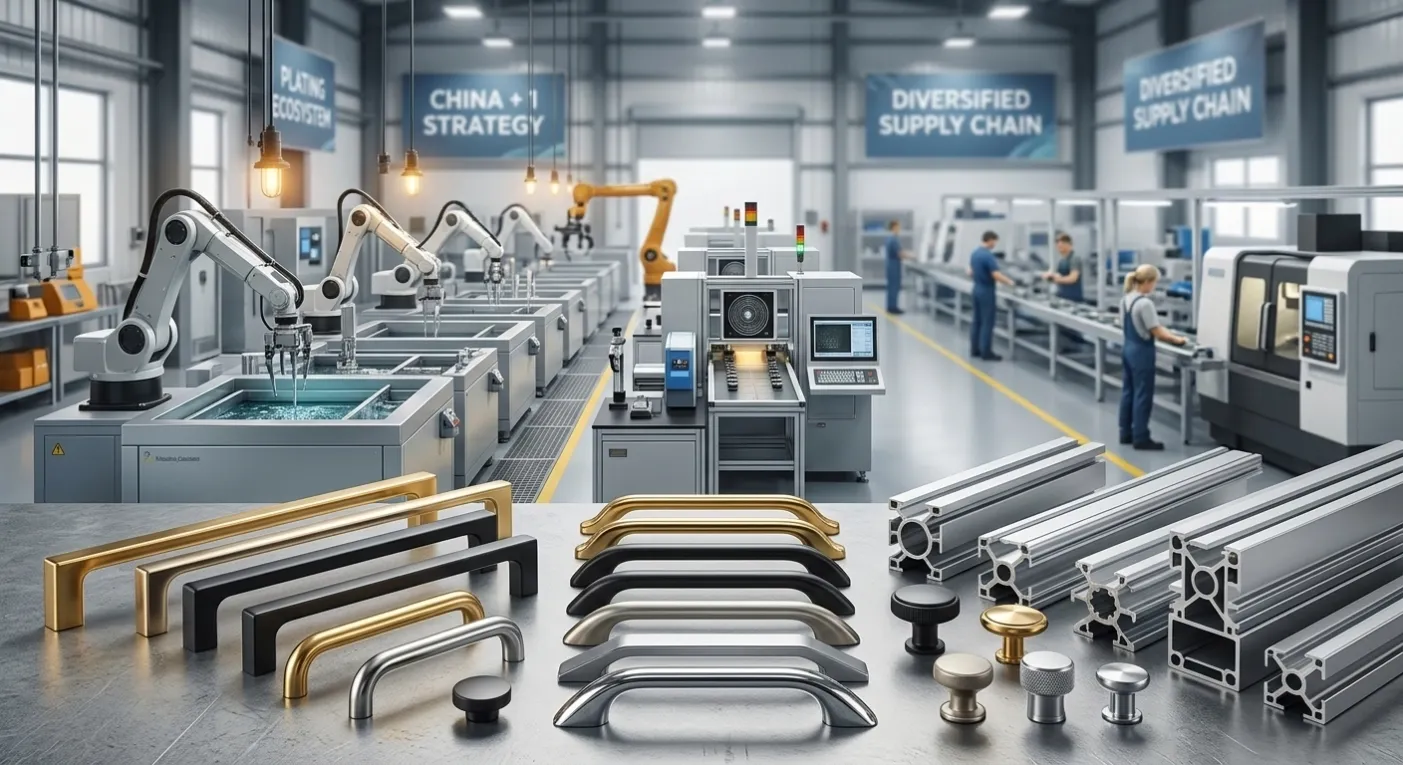
In the cabinet hardware industry, surface finishing is the ultimate differentiator. A handle’s perceived value relies heavily on flawless electroplating, uniform brushed textures, and advanced physical vapor deposition (PVD) coatings.
This is where the supply chain bottleneck manifests most acutely outside China:
- Strict Environmental Compliance & Waste Treatment: Industrial electroplating requires sophisticated chemical waste treatment facilities. China’s centralized industrial hardware parks (such as those in Zhejiang and Guangdong) feature fully integrated, compliant effluent treatment infrastructure. In emerging markets, plating infrastructure remains fragmented, prone to regulatory shutdowns, or environmentally non-compliant.
- Finish Consistency in High-Volume Runs: Achieving a perfectly matched Brushed Brass or Matte Black across a batch of 100,000 units requires precise chemical bath monitoring and automated rack plating systems. Secondary manufacturing hubs often rely on manual or semi-automated plating lines, resulting in high batch-to-batch color variance.
Without a mature local plating cluster, factories in alternative regions must ship raw die-cast parts back and forth across borders for finishing—erasing any initial labor cost savings through increased transit times and freight costs.
2. Tooling Development Speed & Mold Engineering Precision
Speed-to-market is critical for furniture brands launching annual product collections. Developing a new zinc alloy handle or concealed sliding profile requires custom mold design, CNC spark erosion, and rapid prototyping.
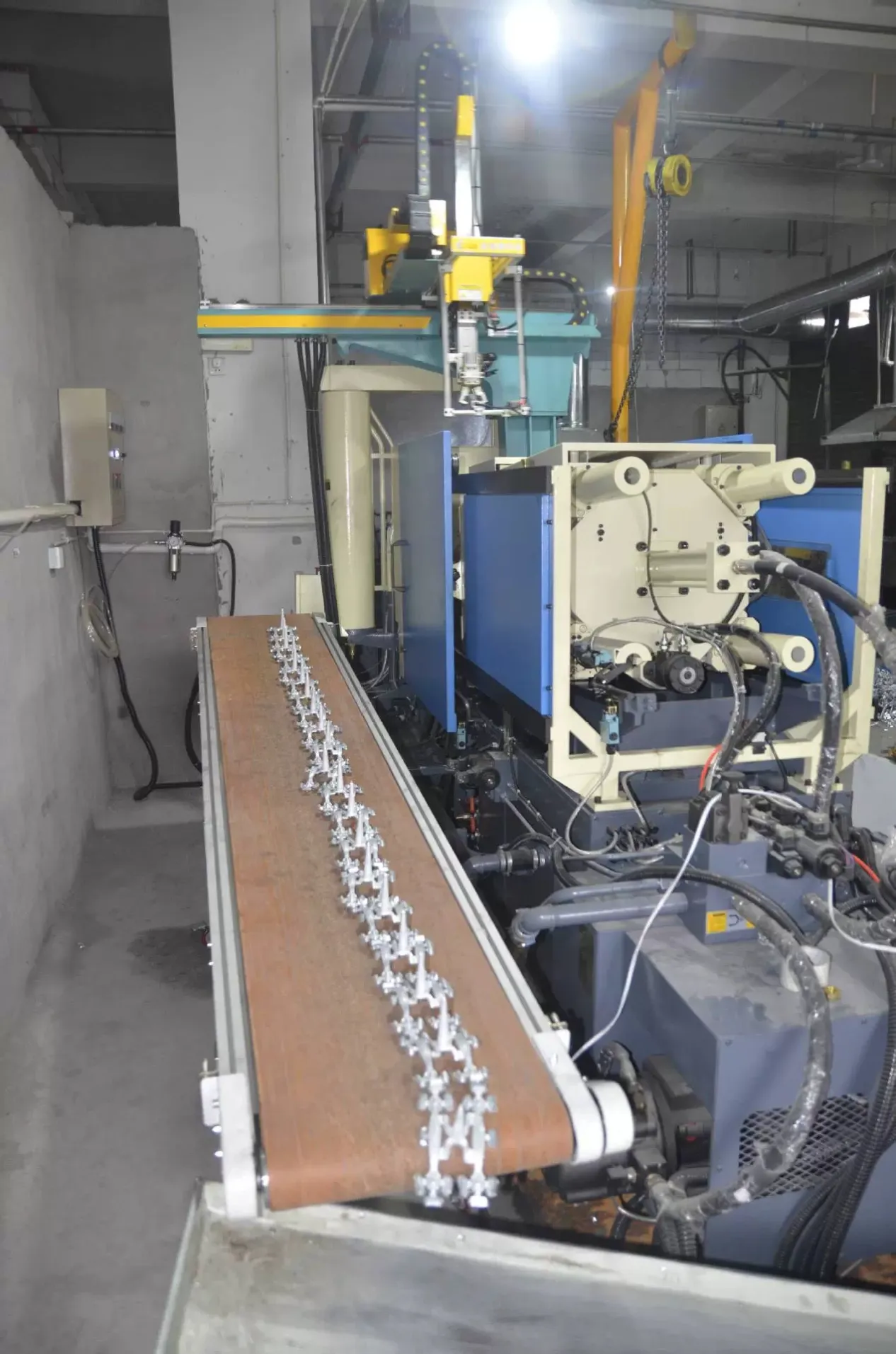
- 30-Day vs. 90-Day Mold Lead Times: In China’s hardware hubs, specialized mold-making shops operate within miles of die-casting foundries. A complex custom mold can be designed, sampled, and refined in 15 to 30 days. In emerging sourcing destinations, specialized mold-making steel and master toolmakers are scarce, stretching mold development cycles to 60 to 90 days.
- High-Precision Tolerance Capabilities: Premium hardware requires tight dimensional tolerances (±0.05mm) to ensure smooth mounting, zero screw hole alignment issues, and smooth hinge movement. Chinese mold engineers leverage decades of accumulated metallurgical expertise, significantly reducing initial sample iterations.
3. Industrial Cluster Density: The Micro-Supply Chain Advantage
China’s competitive edge in metal hardware manufacturing is not merely cheap labor; it is unmatched supply chain cluster density.
In hardware manufacturing capitals like Yiwu, Ningbo, and Foshan, every tier of the production process exists within a 30-minute radius:
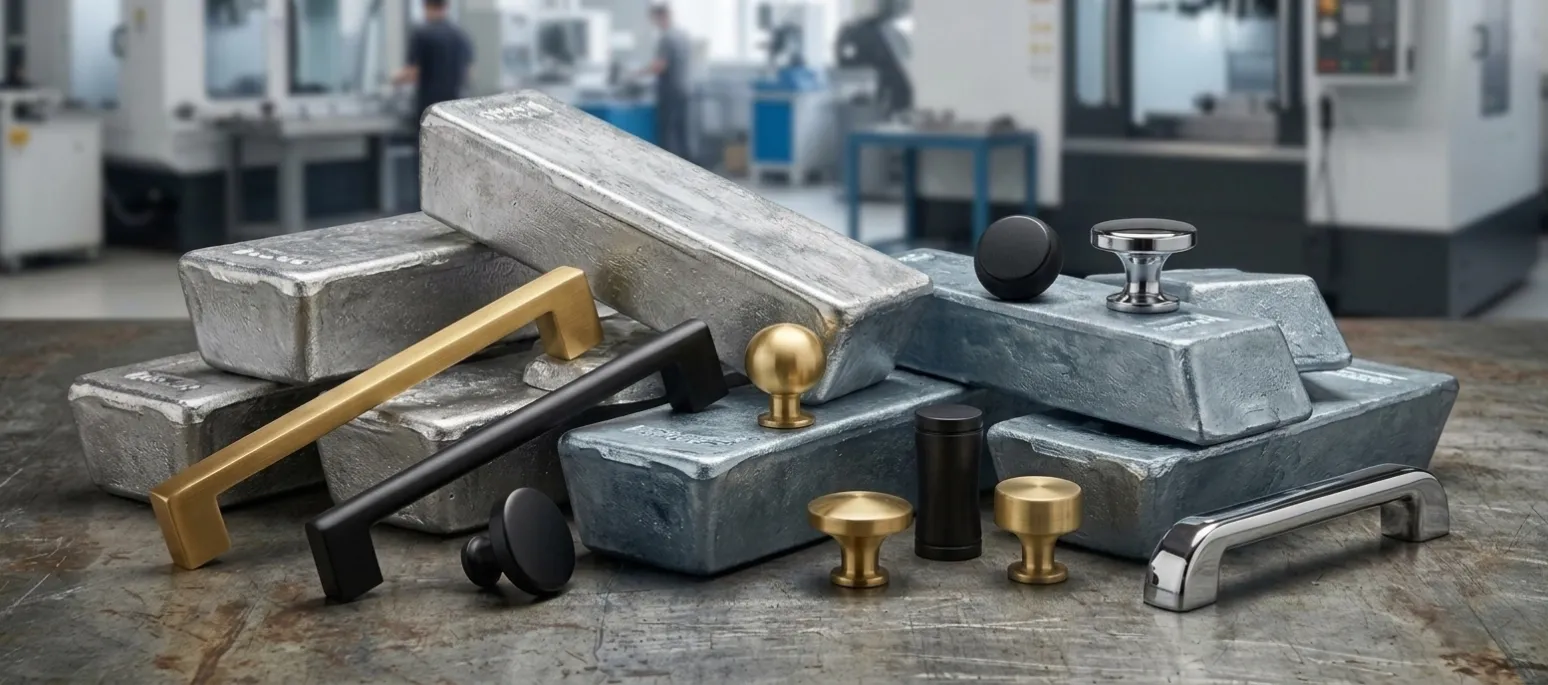
- Raw Material Ingot Suppliers (Zamak 3/5, 6063 Aluminum).
- Precision Fastener & Screw Mills (M4 break-away machine screws).
- Custom Packaging & Blister Shell Manufacturers.
- Independent Metallurgical Testing Laboratories.
When a procurement team requests a minor design modification or custom retail packaging, a Chinese factory can coordinate raw material suppliers, packaging printers, and tooling shops in a single afternoon. In less integrated manufacturing regions, sourcing a non-standard screw size or custom blister tray can delay shipment by weeks.
4. How YOUQI Hardware Empowers Hybrid Sourcing Strategies
At YOUQI Hardware, we understand that global B2B buyers must balance risk management with uncompromising quality standards. We help international partners navigate their "China + 1" strategies by serving as a highly resilient, transparent manufacturing engine:
- Agile OEM/ODM Prototyping: We offer ultra-fast sample turnaround times, allowing brand partners to test new market concepts quickly before committing to full-scale production runs.
- Comprehensive In-House QC & Testing: Our facility conducts rigorous salt-spray testing, cross-hatch adhesion tests, and dynamic load testing on every lot, giving buyers complete quality assurance that protects their brand reputation.
- Flexible Order Batching: We support tiered procurement schedules and blanket purchase orders (BPOs), helping buyers optimize shipping container space and manage inventory周转 efficiently.
Conclusion: Strategic Coexistence, Not Total Relocation
The "China + 1" strategy is evolving from a naive push for total factory relocation into a more sophisticated, hybrid supply chain model. While basic assembly or low-precision items may shift to secondary markets, high-precision zinc alloy, premium aluminum profiles, and decorative electroplated cabinet hardware remain anchored in China’s mature industrial ecosystem.
For global hardware buyers, the winning strategy is clear: leverage secondary regions for basic risk diversification, but partner with established Chinese manufacturing leaders like YOUQI Hardware to secure the precision engineering, flawless finishes, and rapid supply chain execution that drive brand profitability.
Evaluating your global hardware supply chain or looking for a trusted Chinese manufacturing partner? Contact the YOUQI Hardware team today to discuss custom OEM/ODM solutions and request product sample kits.