Oct 28, 2026Buying Guides
Container Space Optimization for Hardware Importers: Packing Density & Freight Cost Reduction
Learn how global hardware importers optimize container packing density, balance weight and volume limits, and streamline packaging design to cut ocean freight costs significantly.
Container Space Optimization for Hardware Importers: Packing Density & Freight Cost Reduction
Introduction: The Hidden Logistics Cost in Metal Hardware Sourcing
In modern international B2B procurement, ocean freight charges and container utilization rates exert a direct influence on the landed cost per unit. For hardware importers, cabinet profile distributors, and OEM furniture brand owners sourcing high-density metal components from overseas, shipping efficiency is often where profit margins are either won or lost.
Cabinet handles, zinc die-cast knobs, and extruded aluminum profiles present a unique logistical challenge. Unlike lightweight, bulky goods that easily fill a container’s cubic capacity (Volume Weight), metal hardware is heavy and dense. Importers frequently hit a container’s maximum weight limit long before utilizing its total internal volume—paying for unused "dead space" while incurring heavy-weight surcharges.
Conversely, poorly planned individual packaging, unoptimized master cartons, or mismatched pallet dimensions can lead to under-filled containers, transit damage, and excessive handling overhead at receiving warehouses.
How can professional hardware buyers optimize packing density, balance volume with weight, and minimize total landed freight costs? Here is a practical engineering guide to container space optimization for high-volume hardware sourcing.
1. Understanding the Weight vs. Volume Dilemma in Hardware Shipping
To optimize container loading, procurement teams must understand the payload constraints of standard ocean shipping equipment:
- 20ft Standard Container (20' GP): Ideal for heavy, dense products like zinc alloy handles and steel components. Reaches maximum payload capacity (~21,000 kg to 26,000 kg depending on shipping line limits) with minimal cubic space required (~28-30 CBM used out of 33 CBM).
- 40ft High Cube Container (40' HC): Ideal for long aluminum profile extrusions, recessed handles, and mixed loads. Offers up to 76 CBM of volume, but carries a payload weight limit (~26,000 kg to 28,000 kg) similar to a 20ft container.
Landed Freight Cost Formula: Landed Freight Cost per Unit = (Ocean Freight + Terminal Charges + Inland Trucking) / Total Units Loaded
When importing dense hardware, shipping a 40' HC filled only with heavy zinc handles will exceed road weight regulations before the container is half full. The key to cost reduction lies in strategic load balancing and modular packaging engineering.
2. Packaging Design Engineering for Maximum Density
Container optimization begins long before goods reach the loading dock—it starts at the packaging structural design stage:
A. Right-Sizing Inner & Master Cartons
Excessive void space inside master cartons leads to crushed boxes during stacking and wastes valuable container space. By engineering custom-fit inner boxes tailored precisely to handle dimensions and M4 screw placements, factory packing teams eliminate air pockets and increase carton stacking strength by up to 35%.
B. Nesting & Disassembled Packaging (CKD/SKD)
For multi-component hardware, such as long sliding door profiles, wardrobe rails, or modular handle assemblies, shipping items in Complete Knock-Down (CKD) format significantly increases packing density compared to pre-assembled units.
C. Standardized Pallet Footprints
Utilizing standardized fumigated wooden or heavy-duty plastic pallets designed to match 20' GP and 40' HC floor dimensions (e.g., standard 1100mm * 1100mm or European 1200mm * 800mm pallets) prevents side-gap wasted space and protects carton edges from forklift damage.
3. Advanced Cargo Mixing Strategies (Heavy vs. Light Pairing)
One of the most effective ways to lower freight costs per unit is Volumetric Cargo Pairing within full container loads (FCL):
- Combining Zinc & Aluminum SKUs: Zinc alloy handles are high-density/heavy, whereas extruded aluminum profiles (especially hollow or recessed channels) are lower-density/bulky. Mixing both product lines in a single 40' HC container allows importers to hit maximum weight limits and maximum cubic volume limits simultaneously.
- Kitted Retail Packaging: Packing mounting hardware, plastic end caps, and aluminum profiles together in slim, flat retail sleeves prevents loose box movement and maximizes container floor loading.
- Floor-Loading vs. Palletizing: For stable, heavy-duty master cartons with high crush resistance, strategic floor-loading (hand-stacking) can increase total container capacity by 12% to 15% compared to palletized shipments, providing substantial savings on high-volume core product lines.
4. How YOUQI Hardware Helps Importers Minimize Landed Freight Costs
At YOUQI Hardware, we recognize that delivering value extends beyond manufacturing precision—it includes helping our global partners optimize their entire logistics footprint:
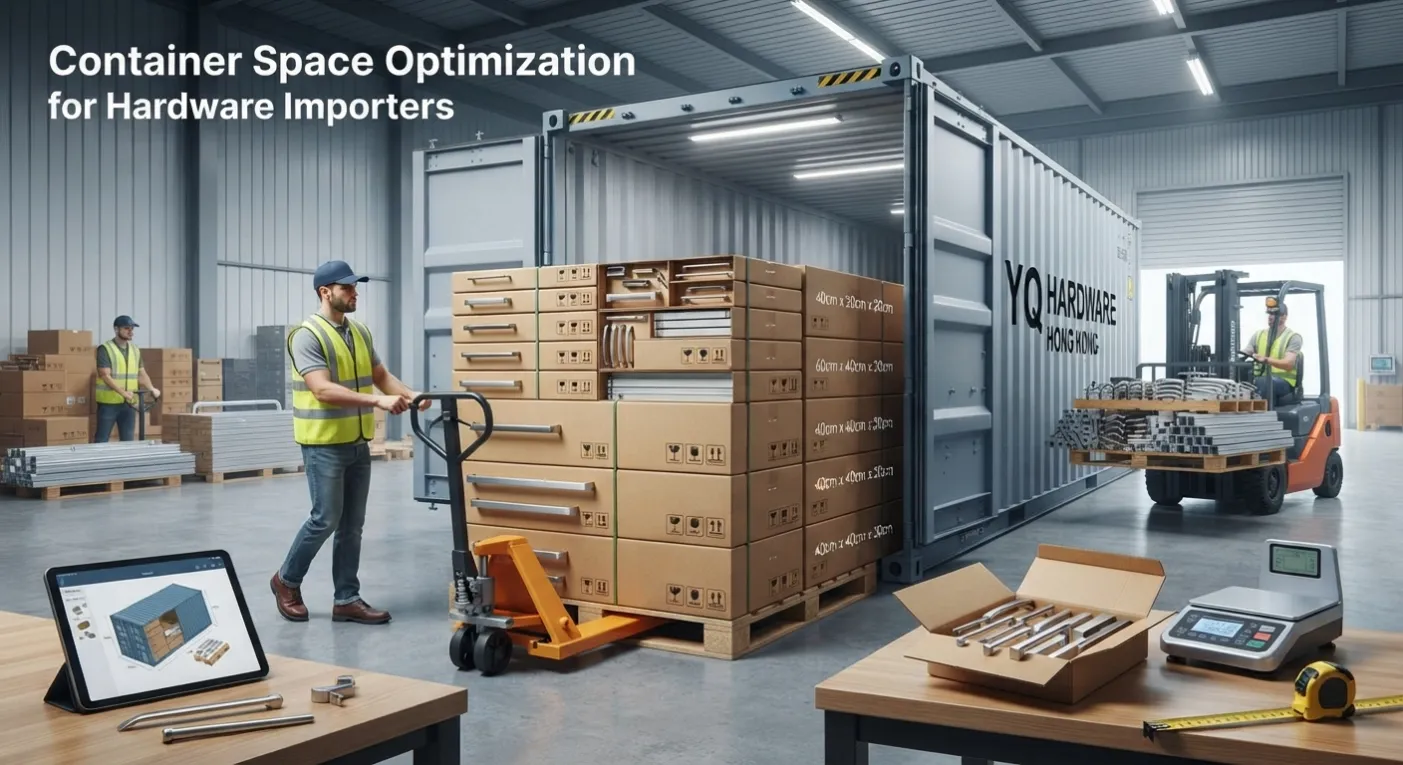
- Custom Container Loading Calculations (3D Stacking Software): Our export logistics team utilizes advanced 3D container loading simulation software to calculate exact carton layouts, weight distribution, and pallet configurations before production starts.
- Custom Molded Protective Packaging: We design high-density individual blister packs and custom-nested master cartons that protect delicate electroplated and powder-coated finishes while eliminating wasted volume.
- Flexible Mixed-SKU Container Loading: We allow buyers to combine multiple hardware categories—from zinc knobs and handles to long aluminum profile channels—into single FCL shipments, enabling maximum container utilization.
Conclusion: Turn Freight Efficiency into Profit Margin
Container space optimization is a high-leverage opportunity for B2B hardware importers. By transitioning from generic off-the-shelf packaging to engineered carton dimensions, strategic SKU mixing, and precise 3D container load planning, procurement teams can dramatically reduce per-unit shipping costs, eliminate transit damage, and strengthen overall supply chain competitiveness.
Looking to reduce landed freight costs or optimize container packing for your upcoming hardware orders? Contact the YOUQI Hardware engineering and logistics team today for custom packaging solutions.