Aug 31, 2026Buying Guides
Navigating the Hardware Supply Chain: 5 Tips | YOUQI
Discover 5 practical tips for managing the cabinet hardware supply chain, including sourcing, production, quality control, communication and delivery.
Navigating the Hardware Supply Chain: 5 Tips from the Experts at YOUQI
For furniture brands, cabinet manufacturers, distributors and importers, sourcing cabinet hardware is not simply about finding a product at the right price.
A successful hardware project depends on several connected stages, including product sourcing, production, quality control, communication and delivery.
When one part of the supply chain is not managed properly, it can affect the entire order. Inconsistent finishes, unclear packaging requirements, production delays and poor communication can all create unnecessary problems for buyers.
With around 10 years of experience in cabinet hardware, YOUQI combines factory resources with supply chain integration to provide customers with a more coordinated sourcing and production solution.
Here are five practical tips for navigating the cabinet hardware supply chain more effectively.
Key Takeaways
- Look beyond unit price when evaluating a cabinet hardware supply chain.
- Confirm product specifications and requirements before production begins.
- Choose a supplier with reliable production and quality control capabilities.
- Make packaging requirements clear before placing the order.
- Maintain consistent communication throughout production and delivery.
- Consolidated sourcing can simplify orders involving multiple types of cabinet hardware.
1. Start with Clear Product Sourcing Requirements
The first step in managing the hardware supply chain is making sure the product requirements are clear.
Cabinet hardware can vary significantly in:
- Design
- Material
- Size
- Hole spacing
- Color
- Surface finish
- Packaging
- Quantity
For example, a buyer may need cabinet handles, cup pulls, knobs and hinges for the same furniture collection.
Instead of treating every product as a completely separate purchasing project, it can be more efficient to coordinate the requirements together.
What Should Buyers Prepare?
Before requesting a quotation, buyers should ideally provide:
- Product type
- Reference photos or models
- Dimensions
- Hole spacing where applicable
- Material
- Color
- Finish
- Quantity
- Packaging requirements
The clearer these specifications are, the easier it is for the supplier to evaluate the project and provide an accurate quotation.
Why Product Sourcing Is More Than Finding the Lowest Price
The lowest unit price does not necessarily mean the lowest overall purchasing cost.
A product that has an inconsistent finish, unclear specifications or unreliable production may create additional costs later through:
- Rework
- Replacement
- Delayed shipments
- Packaging problems
- Customer complaints
A more reliable approach is to consider the entire supply chain rather than focusing only on the initial product price.
2. Make Production Capability Part of Your Supplier Evaluation
Once the products are selected, production becomes one of the most important parts of the supply chain.
Different cabinet hardware designs may require different manufacturing processes.
For example, zinc alloy products are commonly produced through die casting, while aluminum hardware may use die casting or, for certain simple designs, aluminum profiles that can be cut to the required length.
The production method can affect:
- Product structure
- Available sizes
- Customization
- Production efficiency
- Tooling requirements
- Cost
For customized products, buyers should also understand whether an existing mold can be used or whether a new mold needs to be developed.
Customization Requires Better Coordination
OEM and ODM projects may involve:
- New product designs
- Custom molds
- Special dimensions
- Custom colors
- Special finishes
- Customized packaging
A supplier needs to coordinate these requirements before production begins.
For example, color or finish can generally be adjusted without changing the mold, while changes to the product size or shape may require new tooling.
Clear communication at this stage can prevent unnecessary delays later.
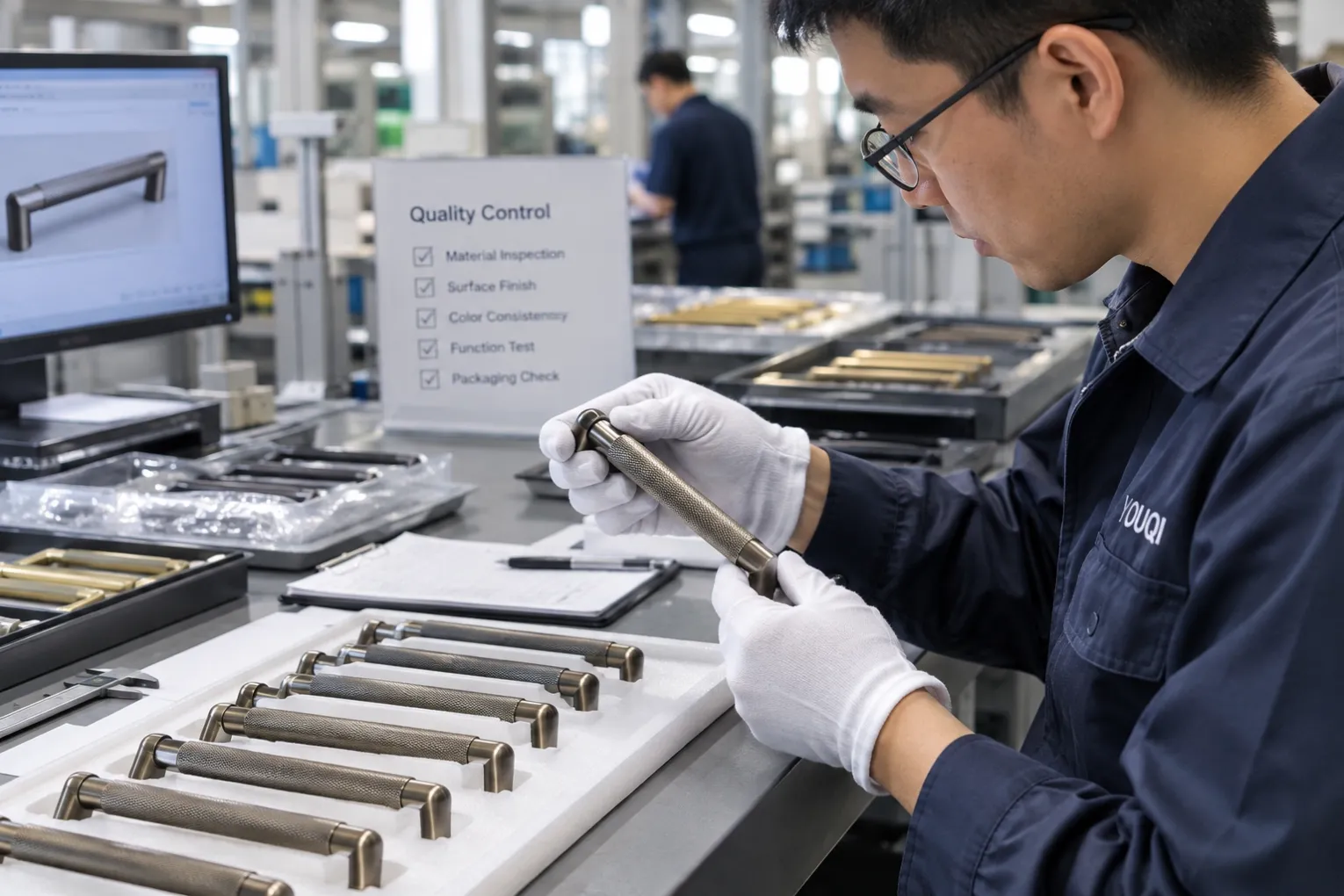
3. Treat Quality Control as a Supply Chain Process
Quality control should not be considered only a final inspection before shipment.
It should be part of the entire supply chain.
For cabinet hardware, quality can involve:
- Material quality
- Product dimensions
- Hole spacing
- Product structure
- Surface finish
- Color consistency
- Function
- Packaging condition
For handles, checking hole spacing is particularly important because incorrect spacing can affect installation.
For hinges, quality checks may include opening and closing performance, repeated operation testing and salt spray testing where applicable.
Consistency Is Especially Important for Large Orders
A buyer may receive a sample that looks correct, but the real challenge is maintaining the same standard throughout mass production.
For this reason, quality control needs to continue during production and before shipment.
At YOUQI, random inspection is carried out based on order quantity, with a 5% sampling rate.
Defective products identified during inspection are scrapped rather than mixed with qualified products.
This helps reduce the risk of defective products reaching the customer.
4. Confirm Packaging Requirements Before Production
Packaging is sometimes overlooked during the early stages of purchasing, but it is an important part of the hardware supply chain.
Cabinet hardware can be damaged during transportation if the packaging does not provide appropriate protection.
Packaging requirements may include:
- Individual product packaging
- Protective materials
- Product labels
- Customer logos
- Inner boxes
- Carton marking
- Customized packaging
For brands and distributors, packaging may also be part of their overall product presentation.
Why Packaging Should Be Confirmed Early
Unclear packaging requirements can create problems after production has already started.
For example, a customer may later require:
- A different box size
- Additional protection
- A different label
- A customer logo
- Different carton quantities
These changes may affect the production and shipping schedule.
It is therefore better to confirm packaging requirements together with the product specifications and order quantity.
5. Maintain Communication from Production to Delivery
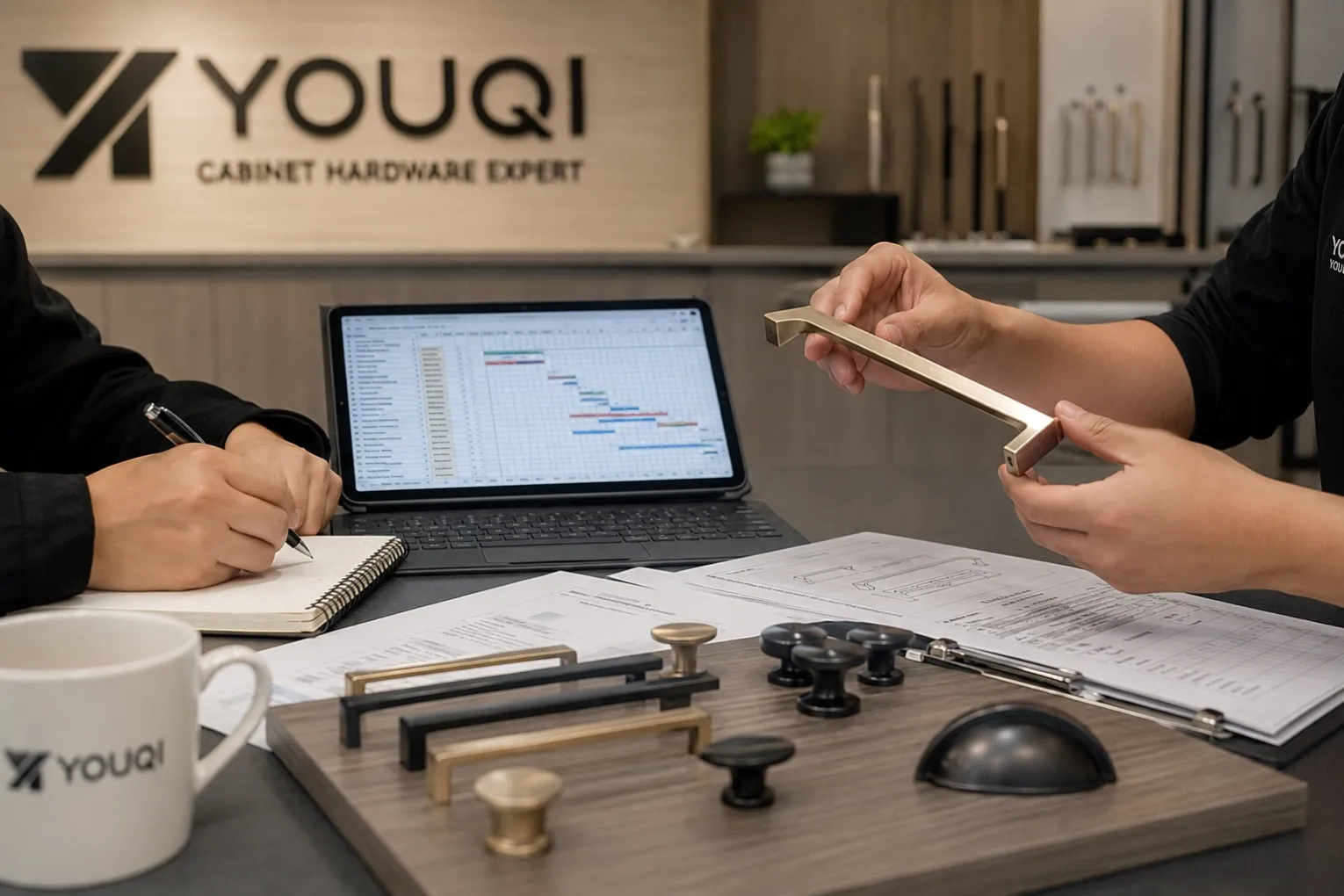
Communication is one of the most important parts of an international hardware supply chain.
A supplier may have good products and production capabilities, but poor communication can still make the purchasing process difficult.
Buyers need to know:
- Whether production has started
- Whether production is progressing as planned
- Whether there are any issues
- When the order is expected to be completed
- When packaging will be completed
- When the goods are ready for shipment
Production Updates Help Buyers Plan Ahead
At YOUQI, production progress can be communicated to customers during manufacturing.
This gives buyers greater visibility into their orders.
For international customers, this is particularly useful because production schedules need to be coordinated with:
- Furniture production
- Warehouse planning
- Shipping arrangements
- Project schedules
- Customer delivery dates
Early communication is also important when an unexpected issue occurs.
A problem that is communicated early can often be addressed more efficiently than a problem discovered immediately before shipment.
How to Manage Multiple Cabinet Hardware Products in One Order
Many furniture projects require more than one type of hardware.
For example, a customer may need:
- Cabinet handles
- Cup pulls
- Cabinet knobs
- Cabinet hinges
- Door hinges
Managing these products through multiple suppliers can increase the complexity of purchasing and communication.
A supplier with factory resources and supply chain integration may be able to coordinate multiple hardware products for the same customer.
This can simplify:
- Product sourcing
- Communication
- Sample confirmation
- Production coordination
- Quality control
- Packaging
- Shipping
For B2B buyers, reducing the number of separate supply chain points can make order management more efficient.
Common Cabinet Hardware Supply Chain Problems
Understanding common problems can help buyers prevent them.
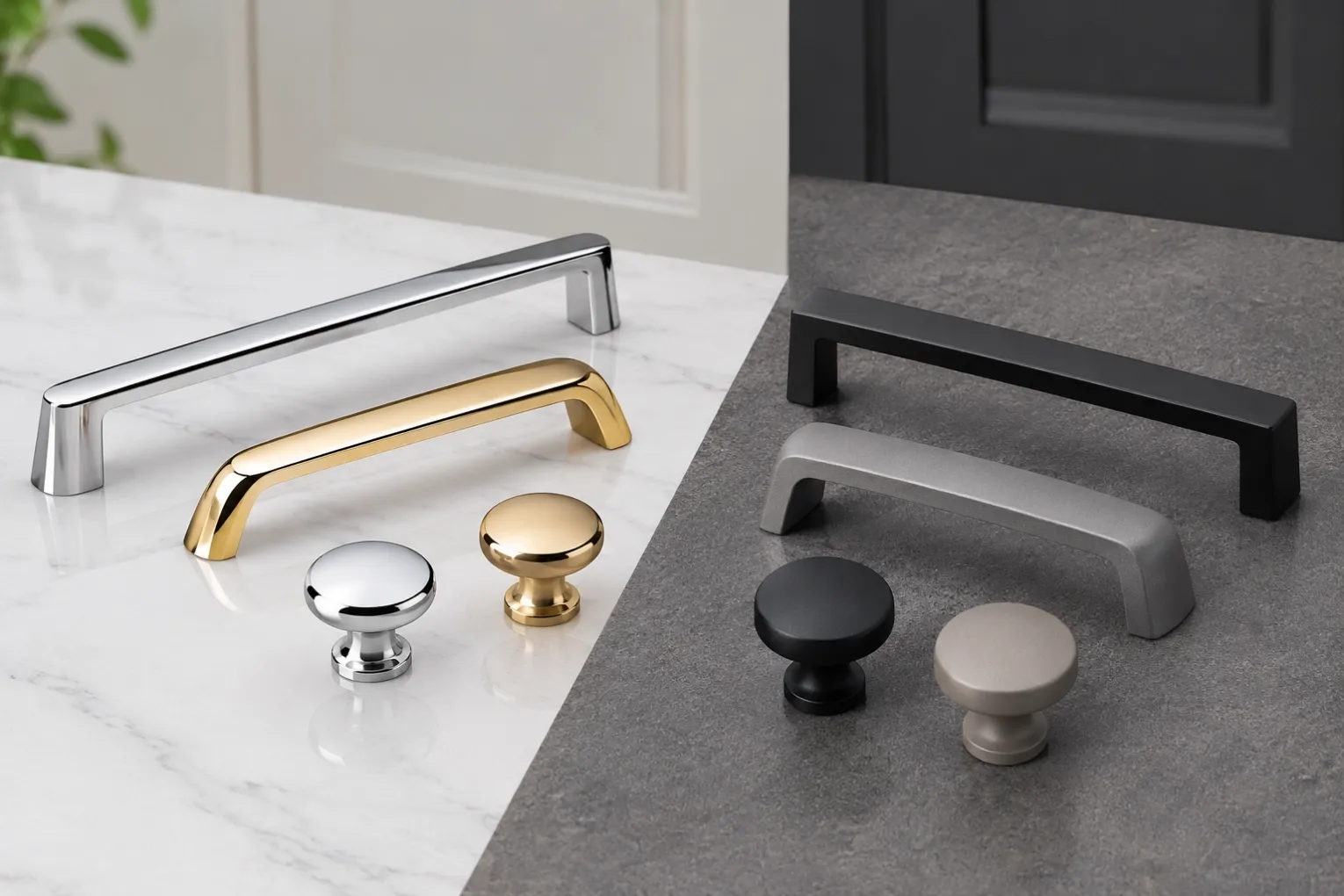
Inconsistent Finishes
The same product may look different if surface finishing is not controlled consistently.
This can become particularly noticeable when several hardware products are used in the same furniture collection.
Poor Product Quality
Quality problems may include:
- Incorrect dimensions
- Poor surface finishing
- Structural defects
- Functional problems
- Inconsistent products
A reliable inspection process is therefore important.
Unclear Packaging Requirements
When packaging specifications are not confirmed in advance, additional work may be required before shipment.
Delayed Production
Production delays can affect furniture manufacturing, shipping schedules and final delivery dates.
Clear production planning and regular communication can help reduce this risk.
Poor Communication
Without timely communication, buyers may not know whether an order is progressing normally or whether an issue has appeared.
For international B2B purchasing, communication is therefore part of the supply chain itself.
YOUQI's Approach to the Cabinet Hardware Supply Chain
YOUQI combines factory resources with supply chain integration and has around 10 years of experience in cabinet hardware.
Our products are supplied to customers in Europe, South America, the Middle East, Southeast Asia and other international markets.
Our main supply chain capabilities include:
Product Sourcing
We provide a wide range of cabinet hardware, including:
- Cabinet Handles
- Cabinet Pulls
- Cup Pulls
- Cabinet Knobs
- Cabinet Hinges
- Door Hinges
- Concealed Hinges
Production
Different materials and product structures can be matched with appropriate production processes.
Our main materials include:
- Zinc Alloy
- Aluminum
- Brass for selected products
Quality Control
Quality checks are carried out according to product requirements.
Handles can be checked for hole spacing, while hinges can be tested for opening performance, repeated operation and salt spray resistance where applicable.
Packaging
We support different packaging requirements, including customized packaging for B2B customers.
Production Communication
Customers can receive updates about production progress, helping them better coordinate their own projects and shipping arrangements.
A Practical Supply Chain Checklist for Buyers
Before placing a cabinet hardware order, buyers can review the following:
Supply Chain Stage | What to Confirm |
|---|---|
Product Sourcing | Product type and design |
Specifications | Size, hole spacing and material |
Finish | Color and surface treatment |
Quantity | Order quantity and MOQ |
Customization | Mold and special requirements |
Sample | Sample approval |
Production | Production schedule |
Quality | Inspection requirements |
Packaging | Individual and carton packaging |
Communication | Production progress updates |
Delivery | Expected completion and shipping arrangements |
Frequently Asked Questions
What is the most important part of the cabinet hardware supply chain?
There is no single stage that determines everything.
Product sourcing, production, quality control, communication and delivery all need to work together.
Why is finish consistency important?
When multiple handles or hardware products are used on the same furniture collection, inconsistent finishes can affect the overall appearance.
Can one supplier provide different types of cabinet hardware?
Yes. Depending on the supplier's product range and supply chain capabilities, customers may be able to source handles, pulls, cup pulls, knobs and hinges through the same supplier.
Should packaging be confirmed before production?
Yes. Packaging requirements should ideally be confirmed together with the product specifications and order quantity.
How can buyers reduce the risk of production delays?
Clear specifications, realistic production schedules and regular communication can help identify potential problems earlier.
Does YOUQI support customized cabinet hardware?
Yes. YOUQI supports OEM and ODM projects, including customized designs, molds, dimensions, colors, finishes and packaging according to project requirements.
Conclusion
A reliable cabinet hardware supply chain is built around more than product price.
For B2B buyers, successful sourcing depends on coordinating product sourcing, production, quality control, packaging, communication and delivery.
The five key principles are:
- Define product requirements clearly.
- Evaluate production capability.
- Make quality control part of the entire process.
- Confirm packaging requirements early.
- Maintain communication from production to delivery.
For projects involving multiple cabinet hardware products, factory resources combined with supply chain integration can also make sourcing and order coordination more efficient.
With around 10 years of cabinet hardware experience, international export experience and support for OEM, ODM and customized requirements, YOUQI provides cabinet hardware sourcing and production solutions for furniture brands, distributors and project buyers.
Ready to optimize your hardware procurement?
Contact the YOUQI Experts today to request our 2026 catalog or to discuss your custom manufacturing needs.