Aug 16, 2026Buying Guides
How to Choose Cabinet Hardware for Different Furniture Applications
Learn how to choose the right cabinet hardware for kitchens, wardrobes, dressers, bathroom vanities, storage cabinets and other furniture applications.
How to Choose Cabinet Hardware for Different Furniture Applications
Introduction
Cabinet hardware is an important part of furniture design. Although handles, pulls, and knobs are relatively small components, they can influence both the functionality and overall appearance of a piece of furniture.
Different furniture applications have different requirements. Kitchen cabinets are used frequently and need practical, easy-to-grip hardware. Wardrobes often require longer handles because of their larger doors, while dressers and smaller storage furniture may work better with compact knobs or pulls.
Choosing the right cabinet hardware therefore involves more than selecting an attractive style. Factors such as furniture type, cabinet size, frequency of use, installation method, finish, ergonomics, and overall design should all be considered.
This guide explains how to select suitable cabinet hardware for different furniture applications.
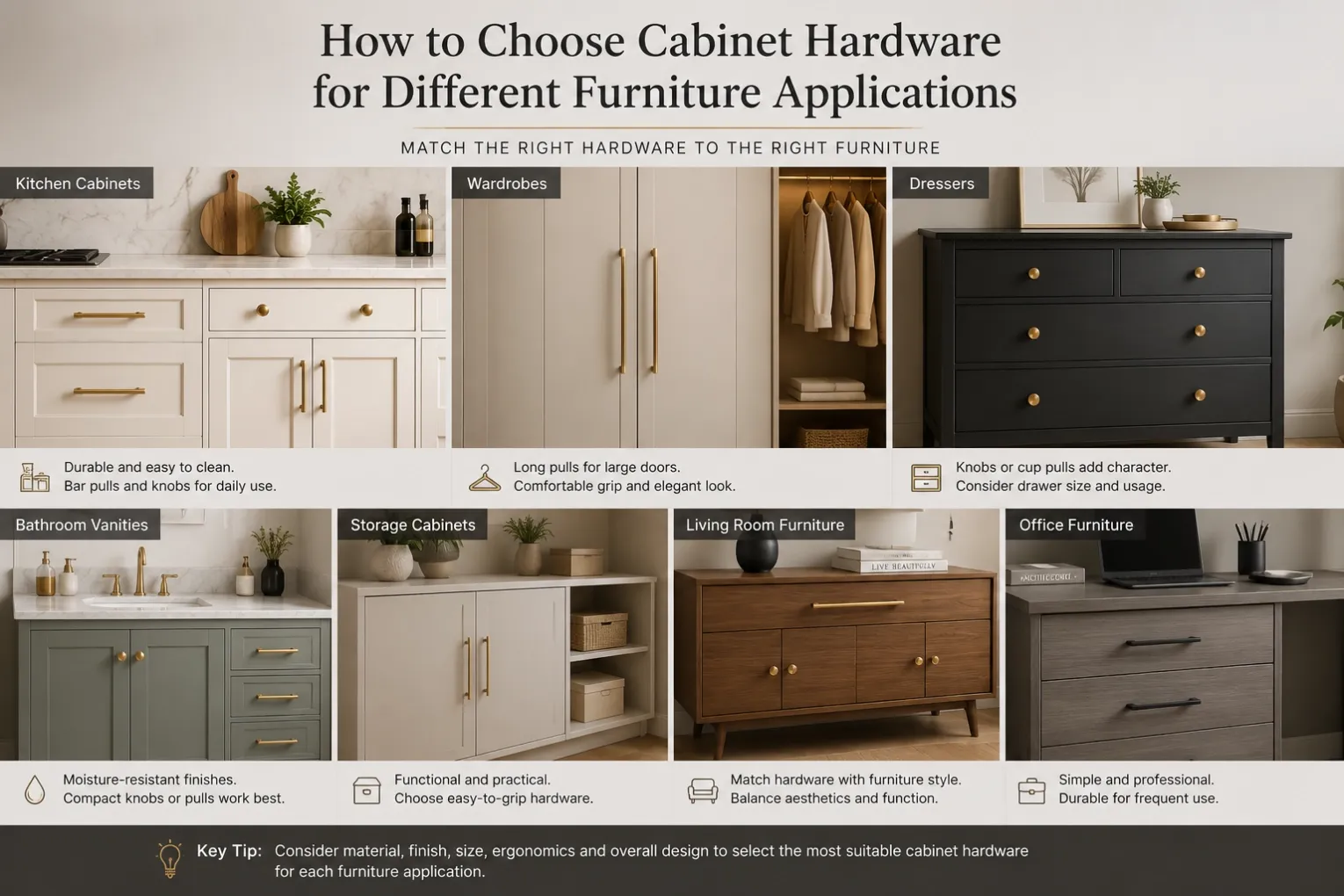
1. Kitchen Cabinets
Kitchen cabinets are among the most frequently used furniture applications for cabinet hardware.
Because handles and pulls may be opened and closed many times every day, functionality and durability are particularly important.
Recommended Hardware
Popular choices include:
- Bar pulls
- Cabinet knobs
- Cup pulls
- Medium and long cabinet handles
Bar pulls are especially versatile because they provide a comfortable grip and can be used on both cabinet doors and drawers.
Knobs can provide a simpler appearance, while cup pulls are suitable for traditional, farmhouse, and transitional kitchen designs.
What to Consider
When selecting kitchen cabinet hardware, consider:
- Comfortable grip
- Easy cleaning
- Durable surface finish
- Appropriate size
- Consistent installation
- Compatibility with the cabinet style
The hardware should be practical enough for everyday kitchen use while also complementing the overall design.
2. Wardrobes and Closets
Wardrobe doors are generally larger than standard kitchen cabinet doors. As a result, hardware needs to be appropriately proportioned.
Long cabinet handles are often a practical choice for wardrobes because they provide a larger gripping area and can visually complement the height of the doors.
Recommended Hardware
Suitable options include:
- Long bar pulls
- Vertical cabinet handles
- Slim modern pulls
- Large cabinet knobs for selected designs
For tall wardrobe doors, vertically installed handles can emphasize the height of the furniture and create a clean, contemporary appearance.
Key Considerations
The size and weight of the wardrobe door should be considered when selecting hardware.
A handle that is too small may feel disproportionate, while an excessively large handle can dominate the appearance of the furniture.
3. Dressers and Chests of Drawers
Dressers and chests commonly feature multiple drawers, making hardware selection particularly important for maintaining visual consistency.
Knobs, cup pulls, and medium-sized handles can all work well depending on the furniture style.
Modern Dressers
Minimalist bar pulls or simple knobs can complement clean-lined modern furniture.
Traditional Dressers
Cup pulls, classic knobs, and decorative handles can reinforce a traditional appearance.
Important Considerations
Because multiple drawers are often arranged together, consistent hardware placement is essential.
Matching hole spacing, finish, shape, and proportions can create a more cohesive furniture design.
4. Bathroom Vanities
Bathroom vanities require cabinet hardware that balances appearance with practical performance.
Bathrooms are exposed to moisture and humidity, so the material and surface finish of the hardware should be selected according to the application.
Recommended Hardware
Popular choices include:
- Compact cabinet pulls
- Small bar handles
- Cabinet knobs
- Simple contemporary handles
The hardware can also be coordinated with other bathroom elements such as faucets, towel bars, mirrors, and lighting fixtures.
Finish Considerations
Stainless steel, suitable plated finishes, and other appropriately treated metal hardware can be considered for bathroom furniture.
The selected finish should provide the desired appearance while being suitable for the intended environment.
5. Storage Cabinets
Storage cabinets are used in many areas of a home, office, retail environment, and commercial space.
Because their design requirements vary considerably, hardware should be selected according to the cabinet size, frequency of use, and surrounding environment.
Recommended Hardware
Suitable options include:
- Practical bar pulls
- Cabinet knobs
- Medium-sized handles
- Recessed or low-profile hardware for selected applications
For frequently used storage cabinets, comfortable gripping and reliable construction should take priority.
For decorative storage furniture, the hardware can play a stronger role in the overall visual design.
6. Living Room Furniture
Cabinet hardware can also be used on living room furniture such as sideboards, TV cabinets, display cabinets, and storage units.
In these applications, hardware is often an important decorative detail because the furniture is visible within the main living space.
Recommended Hardware
Depending on the furniture style, suitable options include:
- Slim bar pulls
- Minimalist knobs
- Brass handles
- Decorative pulls
- Knurled hardware
Natural wood furniture can be paired with warm metallic finishes, while modern dark furniture may benefit from contrasting gold, brass, or stainless steel hardware.
7. Office Furniture
Office furniture typically prioritizes practicality, durability, and a professional appearance.
Cabinet hardware used on office storage units, filing cabinets, desks, and built-in furniture should be easy to use and appropriate for frequent operation.
Recommended Hardware
Common choices include:
- Simple bar pulls
- Straight cabinet handles
- Compact knobs
- Matte black hardware
- Satin nickel hardware
Neutral finishes are often effective because they can complement a wide range of office furniture designs.
8. Consider the Size of the Furniture
Furniture size should always be considered when choosing cabinet hardware.
Large wardrobe doors may require longer handles, while small drawers can look better with compact pulls or knobs.
A useful approach is to compare the overall dimensions of the furniture with the length and visual weight of the hardware.
The goal is to create balanced proportions rather than simply selecting the largest or smallest available option.
9. Consider How the Furniture Will Be Used
The frequency and method of use can influence hardware selection.
Furniture that is opened frequently requires hardware that is comfortable to grip and easy to operate.
For example:
- Kitchen cabinets require practical everyday hardware.
- Wardrobes benefit from handles suitable for larger doors.
- Bathroom furniture requires finishes appropriate for humid environments.
- Office storage needs durable and functional hardware.
- Decorative living room furniture can place greater emphasis on visual design.
The best cabinet hardware balances appearance with the actual needs of the application.
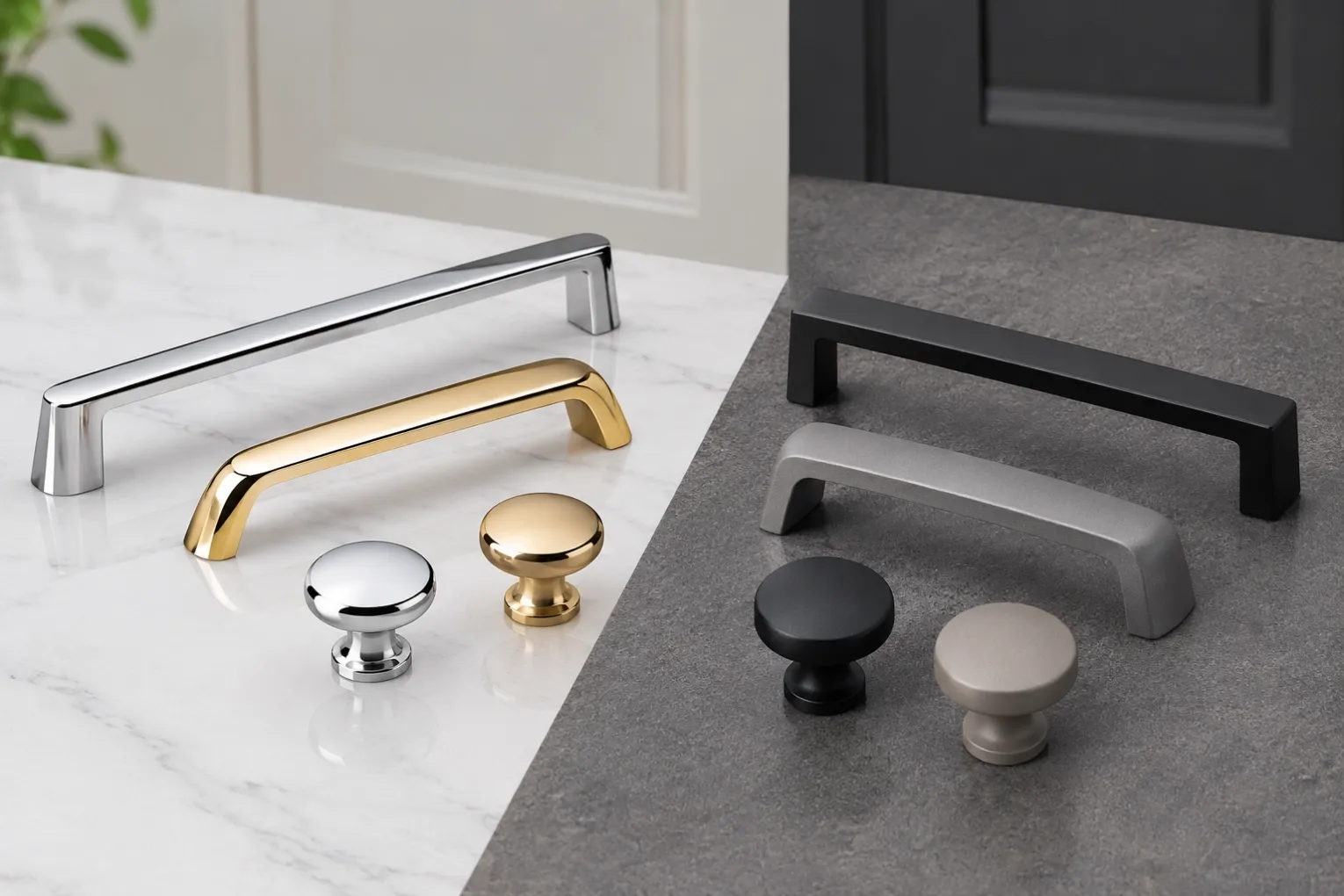
10. Choose the Right Hardware Finish
The finish should complement both the furniture and the surrounding environment.
Popular options include:
- Matte black
- Brushed gold
- Satin nickel
- Chrome
- Antique bronze
- Brass
- PVD finishes
A single furniture collection may also offer several finish options to meet different market preferences.
For example, matte black can create a modern appearance, while brushed gold can add warmth and a more premium character.
11. Match Hardware with the Furniture Style
The hardware should support the overall design language of the furniture.
Modern Furniture
Choose clean lines, simple profiles, and contemporary finishes.
Minimalist Furniture
Choose slim, understated hardware with restrained shapes.
Traditional Furniture
Consider knobs, cup pulls, classic handles, and warmer finishes.
Luxury Furniture
Refined proportions, premium finishes, and carefully designed details can create a more sophisticated appearance.
The hardware should feel like part of the furniture rather than an unrelated accessory.
12. Consider Ergonomics and Comfort
A cabinet handle should not only look attractive; it should also feel comfortable during use.
Important factors include:
- Grip size
- Handle depth
- Edge design
- Surface texture
- Installation position
- Overall weight
For frequently used furniture, ergonomic design can have a significant impact on the user experience.
Textured or knurled surfaces, for example, can provide additional tactile detail while maintaining a contemporary appearance.
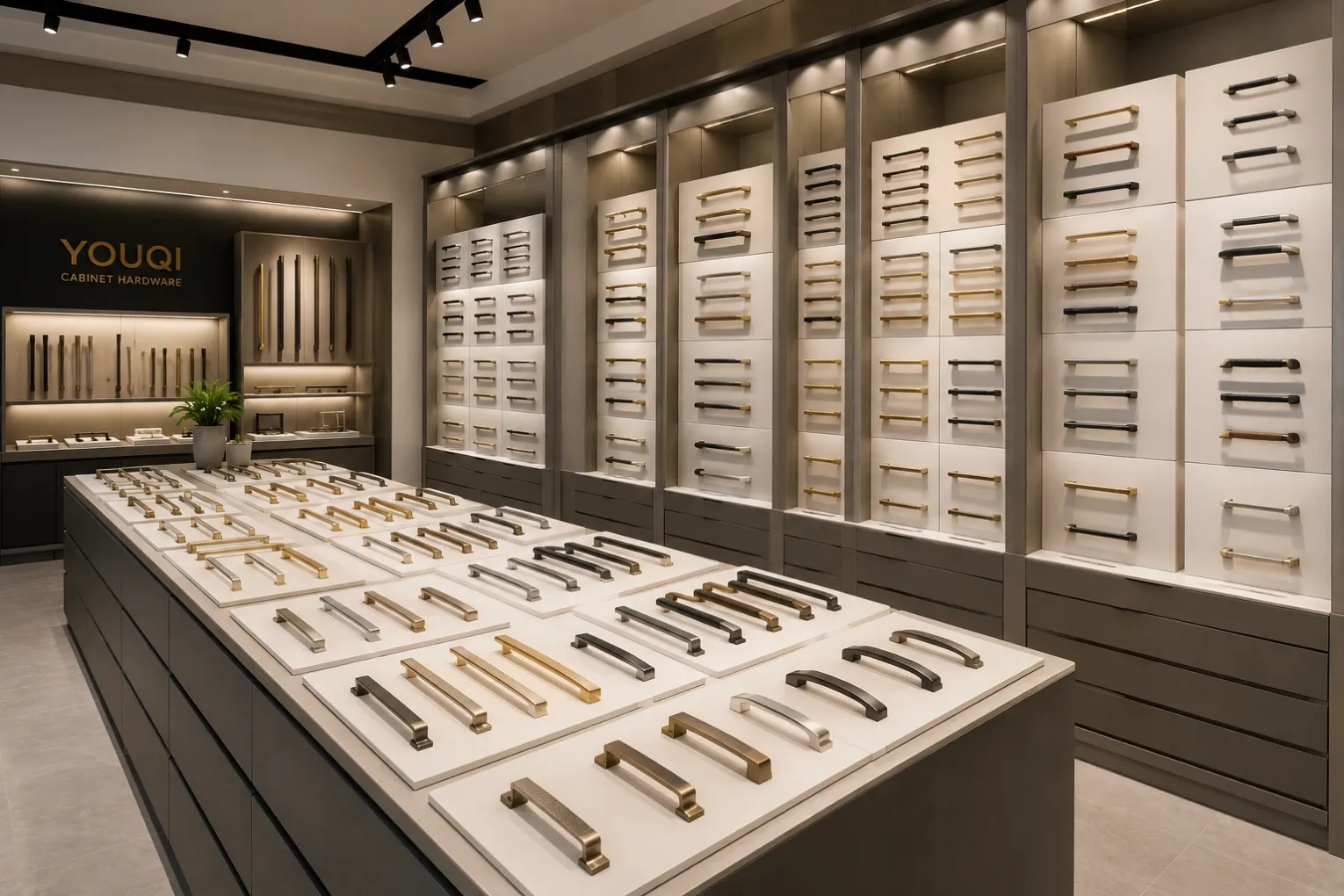
13. Build a Consistent Hardware Collection
For furniture manufacturers and designers, it can be useful to develop a coordinated hardware collection rather than selecting individual products independently.
A collection may include:
- Long cabinet handles
- Short cabinet handles
- Matching knobs
- Cup pulls
- Multiple hole spacings
- Different finish options
Keeping the design language consistent allows the same hardware family to be used across kitchens, wardrobes, dressers, vanities, and other furniture applications.
14. Why Hardware Selection Matters
The right cabinet hardware can improve both the function and appearance of furniture.
Well-selected hardware can:
- Improve usability
- Enhance furniture aesthetics
- Reinforce a design style
- Create visual consistency
- Add a premium appearance
- Support different furniture applications
For furniture manufacturers and distributors, hardware selection can also influence how an entire product collection is perceived by customers.
Conclusion
Different furniture applications require different approaches to cabinet hardware.
Kitchen cabinets benefit from durable and comfortable handles and pulls. Wardrobes often require larger or longer hardware that matches the scale of the doors. Dressers and storage furniture can use knobs, cup pulls, or medium-sized handles depending on their design. Bathroom vanities require appropriate materials and finishes, while living room and office furniture may place greater emphasis on the balance between functionality and visual style.
The right choice depends on several factors, including furniture type, size, usage, ergonomics, material, finish, and overall design.
For furniture manufacturers, designers, distributors, and project buyers, understanding these differences makes it easier to select cabinet hardware that performs well and creates a cohesive final product.
At YOUQI Hardware, we provide cabinet handles, pulls, knobs, hinges, and other furniture hardware for a wide range of applications, with different styles, sizes, materials, and finishes available to meet different project requirements.