Sep 7, 2026Buying Guides
Electroplating vs Powder Coating: Hardware Finish Guide | YOUQI
Compare electroplating vs. powder coating for cabinet handles, pulls, and hinges. Discover differences in durability, corrosion resistance, aesthetics, and manufacturing cost for OEM/ODM projects.
Electroplating vs. Powder Coating: Choosing the Right Finish for Durable Hardware
In the architectural and furniture hardware industry, a product’s surface finish is far more than just a visual touchpoint. It is the primary barrier against wear, moisture, hand oils, and environmental oxidation. For furniture manufacturers, hardware distributors, and commercial contractors, selecting the wrong finishing method can result in premature tarnishing, chipping, customer returns, and damaged brand reputation.
Two surface treatment technologies dominate high-quality hardware manufacturing: Electroplating and Powder Coating. While both serve to protect the substrate—such as zinc alloy, brass, aluminum, or stainless steel—they differ fundamentally in application methodology, aesthetic presentation, functional performance, and unit economics.
This comprehensive guide breaks down the technical mechanisms, key advantages, drawbacks, and optimal application scenarios for both electroplating and powder coating to help you specify the ideal finish for your next hardware project.
1. Understanding Electroplating: Precision Metallic Coating
The Process
Electroplating is an electrochemical process that deposits a thin layer of metal onto a conductive substrate. The hardware item is submerged in an electrolyte bath containing dissolved metal ions (such as chrome, nickel, gold, or copper). An electric current passes through the bath, causing metal ions to bond uniformly to the hardware surface at a microscopic level.
Key Aesthetic Characteristics
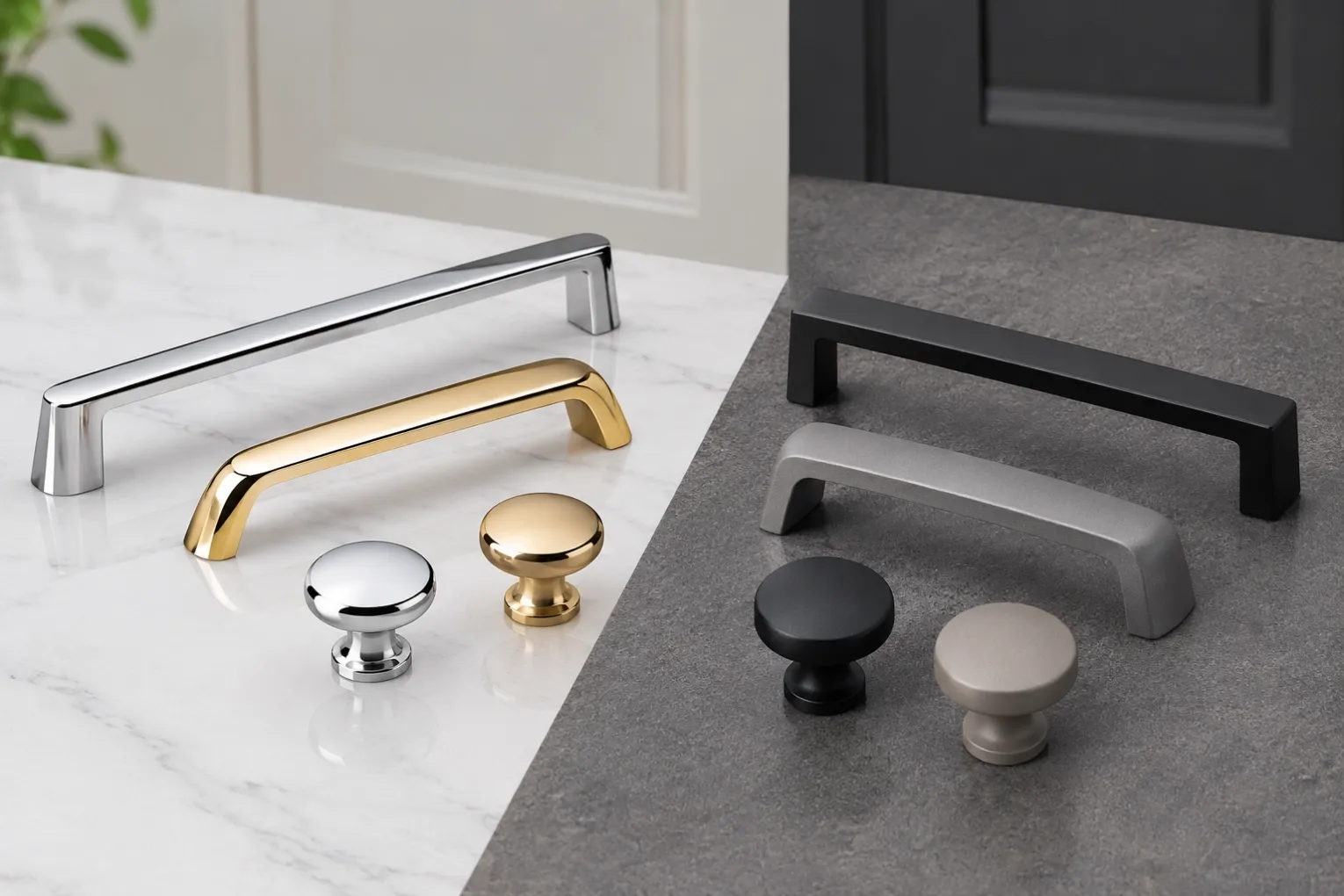
- Metallic Brilliance: Delivers true metallic lusters, including mirror-polished chrome, warm brushed brass, champagne gold, and rose gold.
- Ultra-Thin Profile: Typical coating thickness ranges from 5 to 25 microns, preserving intricate carved details, tactile knurling, and sharp geometric chamfers without rounding off edges.
- Tactile Feel: Feels cool and metallic to the touch, offering a premium, substantial hand-feel favored in luxury interior design.
Advantages
- Unmatched Metallic Sheen: Replicates solid precious metals at a fraction of the raw material cost.
- High Hardness & Wear Resistance: Electroplated layers like hard chrome or nickel provide excellent resistance to daily abrasion and scratching.
- Dimensional Precision: Because the layer is extremely thin, it does not interfere with tight mechanical tolerances on moving parts like door hinges or concealed drawer slides.
Disadvantages
- Higher Environmental Compliance Requirements: Requires rigorous chemical treatment systems for wastewater and chemical management.
- Susceptibility to Acidic Hand Sweat: Inferior electroplating without a protective clear electro-coating (E-coating) or lacquer layer can undergo oxidation when exposed to human perspiration over prolonged periods.
2. Understanding Powder Coating: Heavy-Duty Protective Shell
The Process
Powder coating is a dry finishing process where finely ground particles of pigment and resin are electrostatically charged and sprayed onto grounded metal hardware. The coated parts are then transferred to a curing oven, where the heat melts the powder into a smooth, continuous, cross-linked polymer film.
Key Aesthetic Characteristics
- Versatile Textures & Colors: Available in a vast spectrum of RAL colors, matte finishes, satin sheen, coarse textures, micro-sanded feel, and metallic flake effects.
- Uniform Opacity: Provides 100% color consistency across large production batches without the color shade shifts sometimes associated with plating bath chemistry fluctuations.
- Thicker Protective Barrier: Coating thickness ranges from 60 to 120 microns, creating a rich, solid, tactile finish.
Advantages
- Exceptional Corrosion & Impact Resistance: The thick polymer film acts as a flexible shield that resists chipping, scratching, peeling, and chemical cleaners.
- Eco-Friendly Manufacturing: Contains zero Volatile Organic Compounds (VOCs) and produces minimal waste, as oversprayed powder can be reclaimed and reused.
- Superior UV & Weather Resistance: Specific outdoor-grade polyester powder formulations offer outstanding resistance to sunlight fading, making it ideal for exterior doors and coastal environments.
Disadvantages
- Obscuration of Micro-Details: The thicker film layer can soften fine knurling patterns or fill in sub-millimeter laser engravings.
- No True Metallic Sheen: While metallic powders exist, they cannot fully replicate the reflective mirror depth of genuine electroplated chrome or polished gold.
3. Side-by-Side Technical Comparison
The following matrix highlights the core functional and commercial differences between electroplating and powder coating for hardware manufacturing:
Feature / Metric | Electroplating | Powder Coating |
Primary Mechanism | Electrolytic metal ion deposition | Electrostatic powder spray & thermal curing |
Coating Thickness | 5 – 25 microns | 60 – 120 microns |
Aesthetic Capabilities | True metallic sheen (Gold, Chrome, Nickel) | Matte, satin, textured, solid colors (RAL) |
Detail Retention | Outstanding (Preserves knurling/edges) | Moderate (May soften fine textures) |
Impact & Chip Resistance | Moderate to High | Exceptional (Flexible polymer matrix) |
Neutral Salt Spray (NSS) | 24 – 96+ Hours (Depends on sealant/passivation) | 240 – 1000+ Hours (Highly impermeable) |
Environmental Impact | Requires strict effluent management | Low (Zero VOCs, recyclable overspray) |
Ideal Substrates | Zinc Alloy, Brass, Steel, Stainless Steel | Zinc Alloy, Aluminum, Steel |
Best Application | Luxury interior handles, decorative knobs | High-traffic commercial, matte black lines, outdoor |
4. Selecting the Right Finish for Your Project
When specifying surface treatments for bulk OEM/ODM hardware orders, consider these three decisive criteria:
Scenario A: High-End Residential Kitchen & Custom Joinery
- Recommended Finish: Electroplating (with clear protective E-coating/topcoat)
- Why: High-end kitchens and luxury wardrobes demand the authentic tactile warmth and reflective depth of brushed brass, champagne gold, or gunmetal. Electroplating highlights precision-machined knurling and elegant profiles without adding bulky thickness.
Scenario B: High-Traffic Commercial Projects, Bathrooms & Exterior Hardware
- Recommended Finish: Powder Coating (or PVD Electroplating for extreme budgets)
- Why: Hotel doors, commercial office cabinetry, and bathroom hardware face continuous contact with moisture, cleaning chemicals, and rough usage. A high-durability matte black or textured powder coating delivers superior protection against chipping and corrosion.
Scenario C: Modern Minimalist Matte Black Hardware Lines
- Recommended Finish: Powder Coating
- Why: Achieving a true non-reflective, velvety matte black finish via electroplating requires complex multi-step processes that can be costly and difficult to maintain across large batches. Powder coating provides flawless color depth, uniform texture, and extreme scratch resistance at an economical price point.
5. How YOUQI Hardware Guarantees Superior Finish Quality
At YOUQI Hardware, surface finishing is treated as a core engineering discipline rather than an afterthought. As a specialized OEM & ODM cabinet hardware manufacturer, we implement strict quality controls for both electroplated and powder-coated products:
- Substrate Preparation: All zinc alloy, brass, and aluminum castings undergo multi-stage automated grinding, ultrasonic degreasing, and precision polishing before entering the finishing lines to eliminate surface air holes and imperfections.
- Advanced Testing Standards:
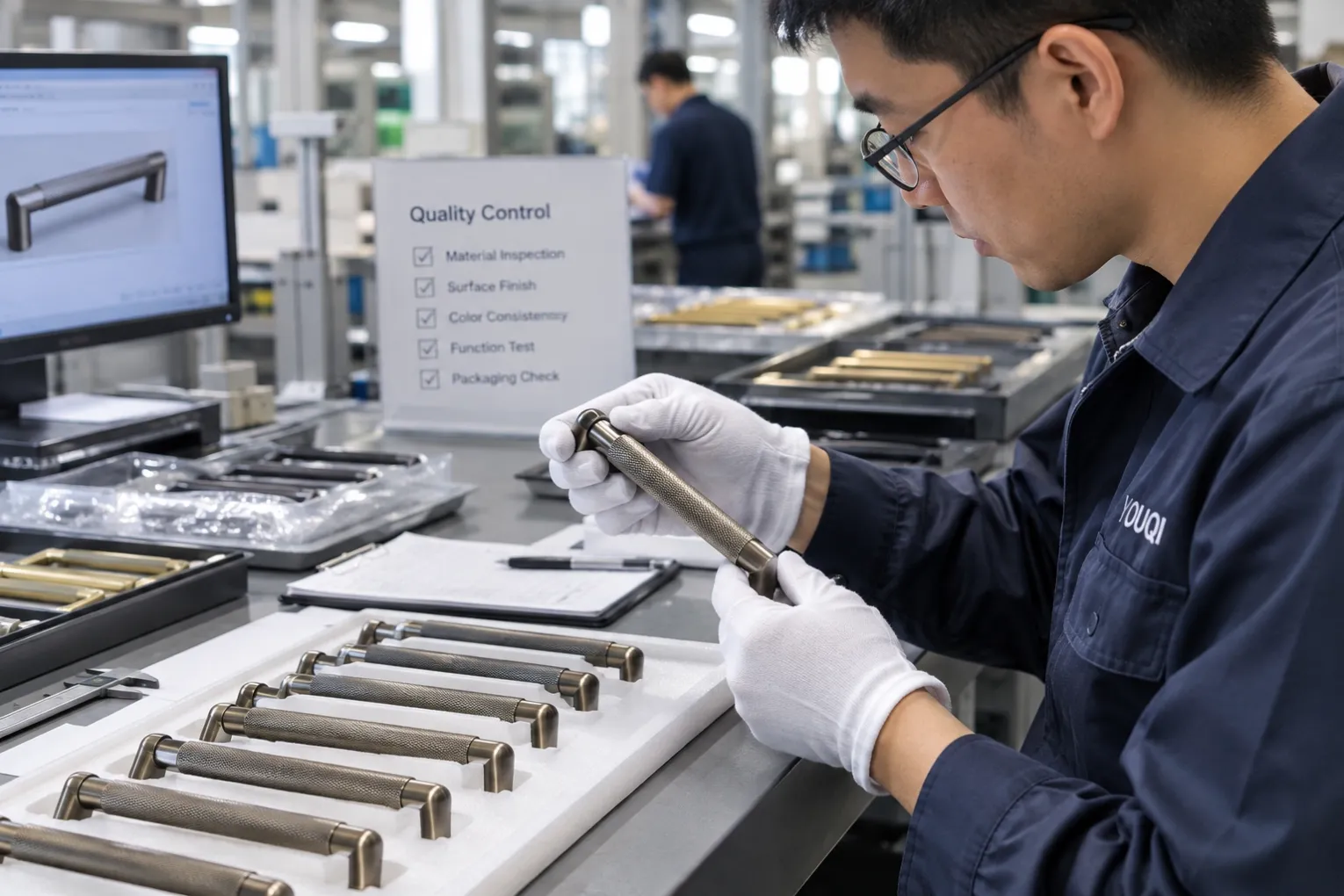
- Neutral Salt Spray Testing (ASTM B117): Hardware samples undergo rigorous salt spray exposure (ranging from 24 to 96+ hours based on client specification) to verify corrosion resistance.
- Cross-Hatch Adhesion Test (ISO 2409): Ensures the paint or electroplated film adheres tightly to the metal substrate without flaking or peeling under stress.
- Color Difference Management: Spectrophotometer testing guarantees color consistency across production batches.
- Flexible Customization: Whether you require custom RAL color-matched powder coatings or specialized brushed electroplated finishes, our engineering team provides rapid prototyping and sample sign-offs prior to mass production.
Conclusion & Next Steps
Choosing between electroplating and powder coating comes down to balancing your aesthetic vision with real-world performance requirements. Electroplating offers unmatched metallic luxury and precise detail preservation, while powder coating provides rugged durability, versatile matte textures, and outstanding environmental resistance.
Need expert advice or custom finish samples for your upcoming hardware collection?
Contact YOUQI Hardware's Engineering Teamtoday to discuss your project requirements, request a custom quote, or order a surface finish sample kit.